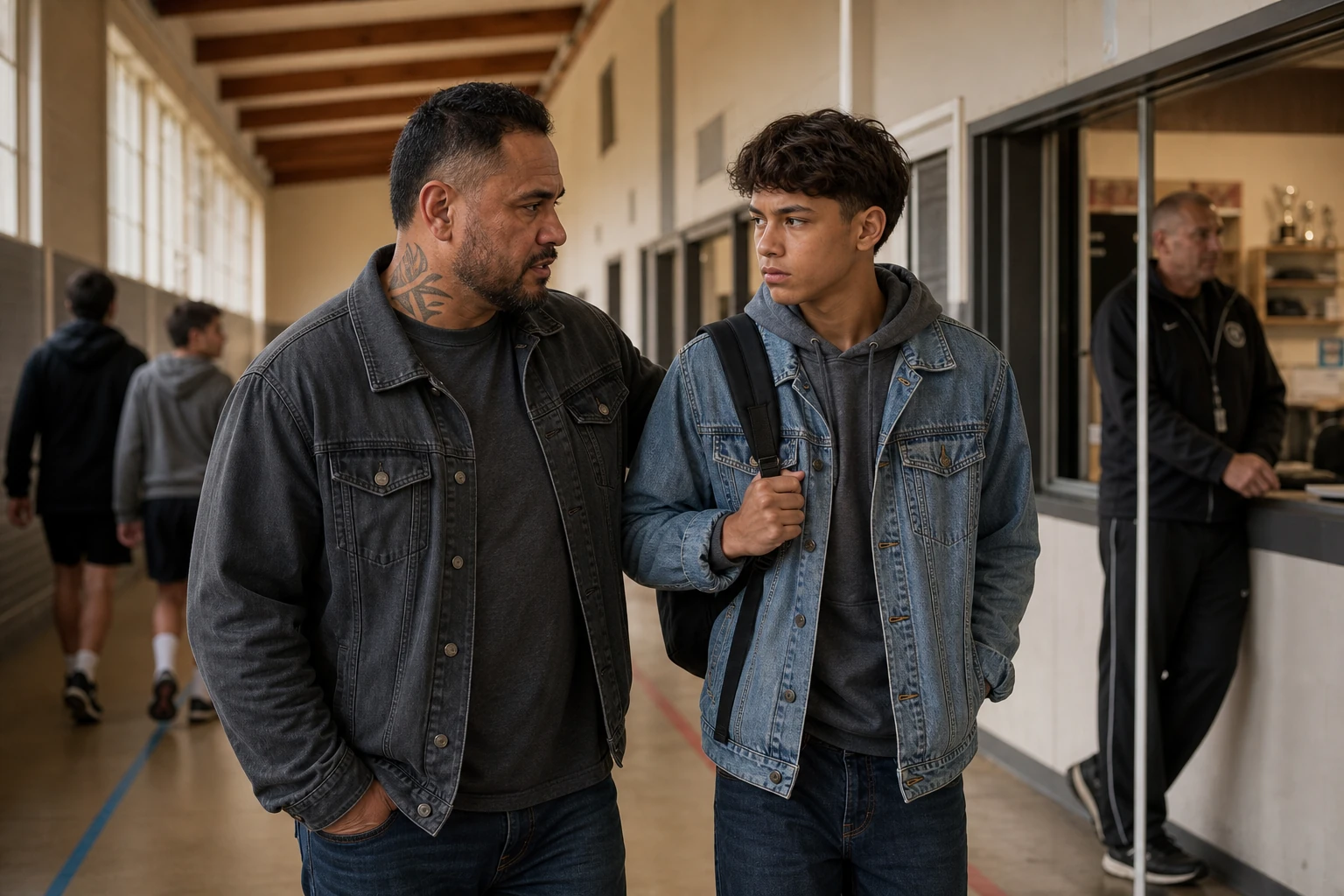
Your teen comes through the door angry.
“I only pushed him because he got in my face. Everyone was watching. What was I supposed to do—look weak?”
This is the part parents are rarely prepared for. “Never back down” can turn dignity into a performance for the crowd. “Just ignore it” can sound as if your teen must absorb anything and expect no help.
There is a third option: one firm line, purposeful movement toward safety, a factual adult report and follow-up.
Try opening with:
“I’m not going to call you weak for walking away, and I’m not going to leave you alone with repeated targeting. Tell me what happened before the first push or threat, who was there, and whether you could get away.”
Start with what a camera could record
Before deciding who is “the bully” or who has “an anger problem,” slow down the story.
Ask:
- What happened just before the first insult, threat, block, touch or shove?
- Who said and did what?
- Could either person leave?
- Was a crowd watching, cheering or filming?
- Was this one conflict or part of a repeated pattern?
- Was there a power imbalance, trapping, injury, weapon or threat?
- Which adult was nearby or told?
A single argument or fight is not automatically bullying. Bullying involves deliberate harm and a power imbalance, usually repeated over time. But your teen never has to wait for repetition before seeking help for an assault, threat or immediate danger.
Why “walk away” can feel like losing
In a school hallway, changing room, bus queue, sports practice or party, the crowd can become part of the problem. Your teen may believe that leaving will invite more targeting. They may also believe that telling an adult will change nothing—or make things worse.
Take that fear seriously without turning it into an order to retaliate.
A purposeful exit is not pretending nothing happened. It has three visible parts:
- A clear boundary.
- Movement toward a safer person or place.
- A report that asks for a concrete response.
It says, “I will not accept this, and I will not perform for you either.”
First: know when to skip the framework
Immediate danger, assault in progress, a credible weapon threat, serious injury, or trapping bypasses CLEAR OUT. Get to safety where possible and contact local emergency help now. Do not delay to complete the framework. This boundary follows directly inspected New Zealand Police emergency criteria for somebody badly injured or in danger, a serious risk to life, or a crime happening now, together with the New Zealand Ministry of Education’s guidance that physical assault, threats and weapons can require police involvement. Use your own local emergency service outside New Zealand.
The guide below is not self-defence or legal advice. It does not tell a teen how to fight, when force is lawful or what outcome a school must impose.
Use CLEAR OUT in this exact order
CLEAR OUT is unvalidated Old Wisdom Retold editorial guidance. It is a memory aid, not a treatment, anti-bullying programme, threat assessment, self-defence protocol or legal guide. No phrase or sequence can guarantee safety, stop retaliation or produce a fair institutional response.
1. CHECK THE LANE
Ask: ordinary disagreement, provocation, bullying or danger?
Ordinary disagreement: One issue is in dispute. Both people can disengage. There is no credible threat or clear power imbalance. A later conversation or repair may fit.
Provocation and audience pressure: Someone is baiting, insulting, crowding or demanding that your teen prove something. The job is not to win the crowd. It is to set one boundary and move.
Bullying: There is deliberate harm and a power imbalance, usually repeated over time. This needs adult and school or service responsibility, not “ignore it” or “sort it out yourselves.”
Danger: Use the immediate bypass above. Safety outranks a perfect line.
A parent can say:
“You don’t need the perfect label before we act. We need to know which lane we are in and who owns the next move.”
2. LINE ONCE
Help your teen choose one short sentence. No insult. No diagnosis. No threat. No speech.
For example:
“Stop. I’m not doing this.”
“Don’t touch me. I’m leaving now.”
Under audience pressure:
“You don’t get to choose whether I fight. I’m out.”
The goal is not perfect calm or politeness. It is one boundary that does not add another challenge to answer. Say it once. Do not stay for the final word.
At home, rehearse it at ordinary volume. Then rehearse the movement that comes next. A line without a destination can leave your teen standing in the same hot spot.
3. EXIT TOWARD SAFETY
Choose the destinations before they are needed:
- the teacher by the gym office;
- the coach beside the equipment room;
- the bus driver;
- a staffed reception area;
- known friends who will help your teen reach an adult;
- home or another agreed safe place.
Make it concrete:
“Say the line once, then walk toward Mr Patel by the gym office. You do not need to stay for their answer.”
Walking away is not always possible or safe. If the lane changes to the immediate bypass, do not delay for CLEAR OUT.
Editorial safeguarding floor: Do not ask a teen to investigate, confront, physically intervene or gather more proof while exposed. This is a safety-first house rule, not an effect established by the cited bullying guidance. It keeps the adult safety job with adults.
A bystander should get adult or emergency help rather than watch, cheer, film or physically intervene when unsafe.
4. ADULT LINK
“Tell someone” is too vague. Name the adult now, then practise a report built from observable facts:
- who;
- what happened;
- where and when;
- witnesses;
- what help is needed next.
For example:
“Jordan blocked the doorway, pushed me and said he would do it again after school. Sam and Lee saw it. I need help getting to the bus safely and a plan for tomorrow.”
If your teen says reporting did nothing last time, do not argue them out of that experience. Strengthen the adult side of the plan:
“I understand why telling feels pointless if nothing changed last time. This time we will ask who owns the safety plan and when we will hear back. You will not have to keep reporting into a blank space.”
A parent can write:
“My teen reports these observable events on these dates. What immediate safety plan, named contact, reporting route and follow-up time will be used?”
Reporting opens a route for action. It does not guarantee a fast, fair or retaliation-free outcome. Follow-up matters.
5. RECORD AND REVIEW
For repeated targeting, threats or injuries, keep a simple factual record where safe:
- date, time and place;
- exact actions or words;
- witnesses;
- injury or damage;
- who was told;
- what response was promised;
- what happened next.
Do not turn ordinary conflict into a family investigation. Do not post “proof,” recruit other teens to question people or send your teen back into exposure for better evidence.
At the agreed follow-up time, review:
- Did the behaviour stop, move or escalate?
- Did the named adult do what was agreed?
- Is support needed for transport, supervision or an activity?
- What is tomorrow’s safe arrival, break or journey-home plan?
- Does your teen owe repair for an insult, threat or shove they chose?
A teen can be targeted and still owe repair for their own harmful action. Repair does not erase what happened to them. Being targeted does not make retaliation safe or acceptable.
Keep the ownership split clear
The parent or responsible adult owns:
- immediate safety and emergency action;
- safe transport;
- school or service contact;
- proportionate home support;
- follow-up when a response stalls or the situation changes.
The teen increasingly owns, when the situation is ordinary and safe:
- the exact boundary wording;
- leaving a non-dangerous exchange;
- the factual report;
- repair for harm they caused;
- saying what support would make tomorrow workable.
The school or responsible service owns:
- investigation;
- supervision;
- the formal safety response;
- action within its authority.
Protecting a teenager does not mean taking over every word. Respecting ownership does not mean leaving safety on their shoulders.
Try this tonight
If there is no immediate bypass:
- Pick one likely scene: hallway, lunch area, bus stop, changing room, practice or party.
- Sort the lane: disagreement, provocation, bullying or danger.
- Choose one short boundary.
- Name two safe destinations.
- Name one adult and rehearse the factual report.
- Agree when the parent steps in automatically.
- Put a follow-up time on the calendar.
Success is not a teen who never feels angry or afraid. It is a teen who can recognise the lane, stay firm without feeding the audience, move toward responsible help and keep building judgment for the next moment.
Optional teen practice
The War Playbook can offer optional practice in choosing which conflicts deserve engagement and protecting tomorrow from a reactive decision. This guide stands alone. The Playbook is not safety, school, emergency, self-defence or legal guidance.
Source note
Official guidance supports distinguishing bullying from one-off conflict, using firm non-aggressive language, moving toward safety, involving responsible adults and getting emergency help for immediate danger. See the New Zealand Ministry of Education's bullying guidance and New Zealand Police guidance on reporting an incident. It does not validate CLEAR OUT, guarantee that a line will prevent violence, or promise that reporting will work quickly. Full links and claim limits are in the source audit.
PARENT ACTION
What to return to your teen
Keep adult ownership of safety, school contact and follow-up while the teenager increasingly owns ordinary boundary wording, purposeful movement, factual reporting and repair for any harm they caused.
PARENT GROWTH NOTE
One useful guide when it matters.
Get practical Parent Growth guides in your inbox. No noise, no pressure, and you can unsubscribe anytime.