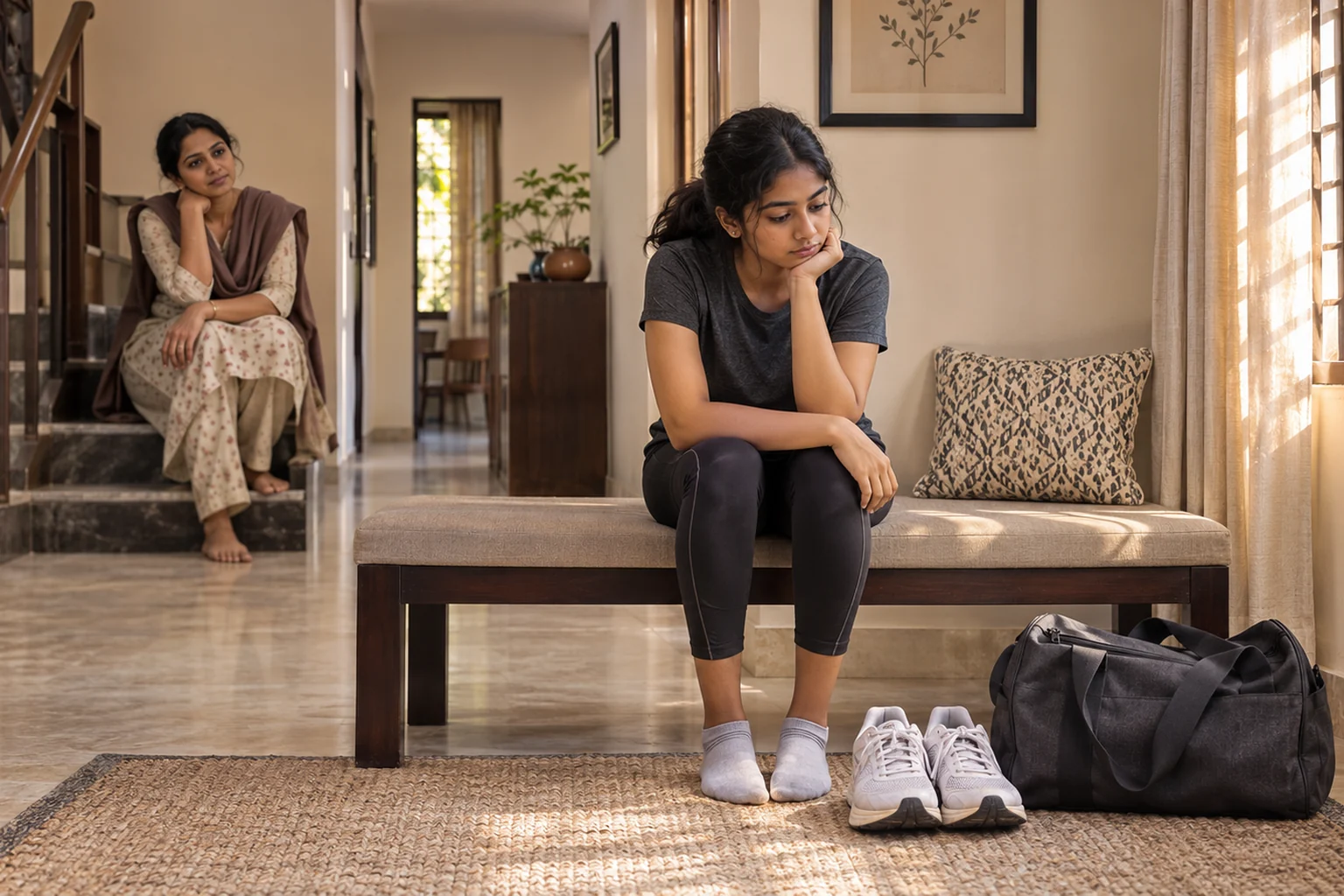
If your teen gives up after a missed day, start with a question, not a verdict. Your daughter skips one running session and says, “The plan is ruined.” Your son misses one music practice and puts the instrument away. It is tempting to think, They were never serious. But one missed chance does not tell you whether they want to continue.
Try a calmer shift: I can acknowledge the miss and make room for them to choose what happens next. You do not have to pretend it did not matter, or promise that one conversation will make them restart.
The next-chance question: You keep the real limits; your teen decides whether to resume a personal plan. If they want to continue, invite them to name one feasible next chance. This is an OWR household suggestion, not a tested treatment or a guarantee.
Why can one missed day feel like the end?
Sometimes a teen hears “missed today” as “I cannot do this.” Sometimes they were tired, had to care for a sibling, could not get to practice, or no longer want the goal. Do not decide their reason before you ask.
Pediatrician Kenneth Ginsburg, writing for the American Academy of Pediatrics about perfectionism, notes that some teens may take mistakes as proof they are not good enough. He suggests asking about the process and what could change next time. That does not mean your teen has perfectionism because they missed one day.
A study by Lally and colleagues followed adults trying small daily behaviours. In the subset who missed one opportunity and then resumed, the miss did not materially change measured automaticity. This does not show that a teenager will restart, that several misses are harmless, or that this parent question works. It only challenges the claim that one missed chance must erase earlier practice.
What does my reaction add to the moment?
You might say “You always quit” because you care about follow-through. Your teen might hear a verdict about who they are, not a question about what happened. That possible impact is worth considering; it is not a prediction about their feelings.
Compare these two responses:
“You missed one day. I knew you would not stick with it.”
“You missed Tuesday. Do you still want this plan? If so, what is a realistic next chance?”
The second line leaves room for “yes,” “not like this,” or even “no.” If the answer is no, find out whether the goal was theirs, whether the schedule fits, and whether another commitment needs to be addressed. You are not obliged to praise every choice. You are making the decision visible instead of turning it into a character test.
Think of missing a bus stop: you do not have to call the whole journey ruined. You check where you are, whether the destination still matters, and the next workable route. A teen's plan deserves that same practical check, not a forced streak.
How do we choose a next chance without taking over?
1. Name what happened and ask once
Pick a calm time, not the instant your teen is upset. State the missed action without turning it into “you never finish anything.” Ask:
“You planned to practise yesterday and it did not happen. Do you want to keep going, change the plan, or stop? What got in the way?”
Listen to the answer. If they do not want to talk now, give them some room and return at an agreed time if the plan affects others. If it is purely their own goal, you may not need to revisit it at all.
2. Let your teen set the restart rule
If they want to continue, have them fill three small blanks. Do not write a perfect schedule for them:
- What: “One lap around the block,” not “get fit again.”
- When: “After Saturday breakfast,” not “soon.”
- If something gets in the way: “If I have a shift or need to watch my brother, I will pick the next free afternoon.”
These are examples to adapt, not a prescribed dose. For a game streak, the question may be whether they actually want to play tomorrow, rather than preserving a number on a screen. For sport practice, the next chance might be the next training session; the parent can still help with transport if that is their role. The teen owns the decision to show up and what to practise.
3. Check the plan, not their worth
After the next chance, a brief check is enough:
“Was that time workable? What would you keep or change?”
If the restart did not happen, ask about the barrier once more. A different plan or a pause may be more honest than another promise. Your role is not to maintain a chart of unbroken days. Help with practical access when needed, and let the teen say what they will try.
What if they refuse or another person was counting on them?
If your teen says, “I do not want to do it,” do not force a personal goal into a test of obedience. You can say:
“Okay. Was this still something you wanted, or has something changed? We can talk about the choice without calling you a quitter.”
But a missed personal habit is different from a commitment to another person. If your teen promised to bring equipment to a team, care for a sibling, or deliver group work, the coach, family member or classmate may still need an explanation or the work. Do not use “fresh start” to cancel that duty. Ask how your teen will tell the person what happened and what they can do now. Keep your household and school rules, safety limits and proportionate consequences. This guide to a visible next commitment covers the separate job of responding after a promise to someone else was missed.
If schoolwork keeps slipping, do not turn this into a new nightly reminder system. The homework handoff guide deals with tracking and adult re-entry over time. If the difficulty is getting started at all, the task-start guide covers that earlier moment. This guide is about a decision after a missed chance.
When should I step back in?
A one-off lapse in a personal plan is not a diagnosis. If the plan keeps failing because of a known ADHD, anxiety, disability or access need, make the task and timing workable and use any existing supports. Do not call a missing accommodation or an impossible transport plan a discipline failure. If a school or activity needs an adult to resolve an access problem, take that part on with your teen.
A wider change needs a different response. If your teen seems sad most of the time for weeks and cannot concentrate or enjoy things they once liked, or you notice ongoing, concerning changes such as withdrawal, different sleep or difficulty at school, talk with them and ask a doctor or appropriate professional about help. NIMH's teen depression guide describes these signs and routes to support. One isolated sign is not a diagnosis; a restart rule is no substitute for care when there is a wider concern.
Immediate danger is not a habit conversation. If your teen says they want to die, has taken steps to harm themselves, or is in immediate life-threatening danger, stay with them and seek urgent local emergency or crisis help now. In the US, call 911 for immediate life-threatening danger or call or text 988 for suicide crisis support; elsewhere, use your local services. NIMH's suicide guidance sets out these urgent actions.
What can I say tonight?
“You missed the day you planned. That matters, but I am not going to turn one day into a verdict on you. Do you still want this goal? If so, what is one next chance that fits your week, and what will you do if the same barrier comes up? If someone else was relying on you, we also need to deal with that promise.”
The bottom line
One missed day calls for a look at the plan, not a judgment of the person. Your reaction can make room for a restart, but the teen chooses the next step and you keep real duties and limits. Discipline without self-hatred.
Your teen's half
If your teen wants a tool for giving their next attempt a shape, read the Discipline Playbook's Chapter 1 excerpt together only if they choose. Its public sample is about one next action and a rough time, not a missed-day-specific excerpt. The parent conversation above stands on its own without the book.
PARENT ACTION
What to return to your teen
The parent asks one neutral question, keeps school, family and safety boundaries, and lets the teen decide a feasible next chance or adjustment to a personal plan.
PARENT GROWTH NOTE
One useful guide when it matters.
Get practical Parent Growth guides in your inbox. No noise, no pressure, and you can unsubscribe anytime.